
On 5 March 2026, the European Commission published the second draft of the Code of Practice on Marking and Labelling of AI-Generated Content — the document that defines exactly how the Article 50 transparency obligations translate into concrete, visual, and machine-readable implementation. For the first time, we can see what the EU AI Icon looks like, how watermarking must be embedded, and what technical specifications content creators, platforms, and AI tool providers must meet. This is one of the most practically important documents published under the EU AI Act to date.
- The Code of Practice is currently a draft — comments are open until 30 April 2026. Final version expected June 2026. Compliance required by August 2026.
- The EU AI Icon is a standardised visual symbol — a stylised “AI” mark with a specific design specification — that must appear on AI-generated content in defined contexts.
- Machine-readable watermarking using C2PA Content Credentials is adopted as the de facto technical standard for embedded metadata watermarking.
- The Code applies to providers of AI tools that generate content and to deployers (operators) who distribute AI-generated content to EU audiences.
1. What Is the Code of Practice on AI Content Marking?
The EU AI Act’s Article 50 requires that AI-generated content be disclosed as such — but Article 50 itself is relatively high-level. It mandates disclosure of AI origin without specifying exactly what the disclosure must look like, where it must appear, or what technical format must be used. The Code of Practice fills that gap.
The Code is developed by the EU AI Office in consultation with industry, civil society, and technical standards bodies. Draft 1 (published September 2025) established the conceptual framework. Draft 2 (5 March 2026) is the first version to include specific technical specifications, icon designs, and implementation timelines. A final version is expected by June 2026.
2. The EU AI Icon: Design and Display Requirements
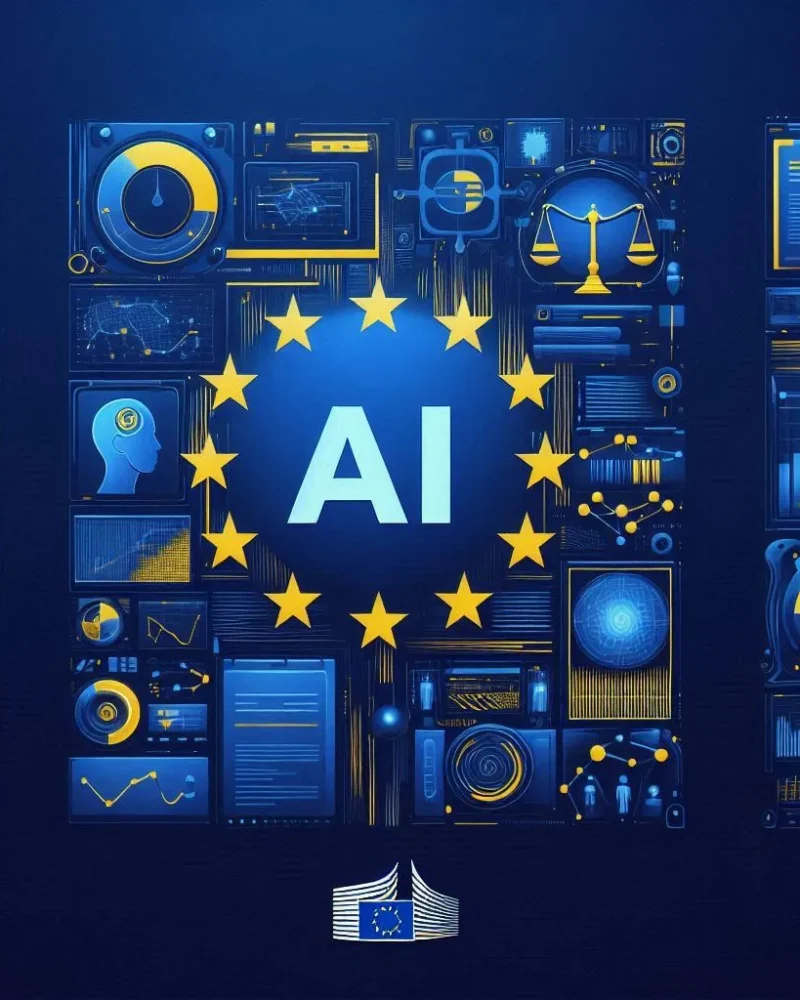
Draft 2 introduces the official EU AI Icon — a standardised visual symbol that must accompany AI-generated content in defined contexts. The icon is described in Annex A of the Code as a stylised representation of the letters “AI” enclosed in a rounded rectangle with the EU star ring motif, in a specified blue pantone colour (PMS 286 C). A vector format asset is published alongside the Code for implementers.
| Display Requirement | Specification in Draft 2 |
|---|---|
| Minimum display size | 24×24 pixels for digital content; 5mm × 5mm for print. Must be legible at normal viewing distance. |
| Position | Corner of the content (any corner acceptable); must not overlap text that is part of the content. For video: persistent display in corner for entire duration or during AI-generated segments. |
| Colour | Official EU blue (PMS 286 C / HEX #003399) on white or light backgrounds. White icon on EU blue background for dark backgrounds. No alternative colours permitted. |
| Tooltip / accessible label | The icon must be accompanied by an accessible text label “AI-generated content” in the relevant EU language, accessible via hover, screen reader, or click. |
| Linking requirement | Icon (or accompanying label) must link to or be accompanied by a disclosure that the content was AI-generated, identifying the AI tool or system used where technically feasible. |
| Where not required | Content that is obviously AI-generated from context; content generated for internal use not published to EU audiences; content used in closed professional workflows. See Annex B of the Code for full exclusion list. |
3. Machine-Readable Watermarking: The C2PA Standard Adopted
Beyond the human-visible EU AI Icon, Article 50 requires AI-generated content to carry machine-readable disclosure — metadata that can be detected by browsers, platforms, search engines, and automated content moderation systems. Draft 2 formally adopts the C2PA (Coalition for Content Provenance and Authenticity) Content Credentials standard as the technical implementation pathway for machine-readable watermarking.
The C2PA specification is an open standard developed by Adobe, Microsoft, Intel, the BBC, and others, that enables the cryptographic signing of digital content with provenance metadata — including information about how content was created, what AI tools were used, and what modifications were made. C2PA metadata travels with the file even when downloaded or shared.
4. Requirements by Content Type
5. Who Must Comply: Providers vs. Deployers
The Code places obligations at two levels of the AI content supply chain:
6. Impact on Your Compliance Checklist
The Code of Practice Draft 2 significantly clarifies what Article 50 compliance requires in practice. For organisations using our EU AI Act Compliance Checklist, these are the specific items that now have technical specifications to meet:
| Checklist Item | What Draft 2 Now Specifies | Your Action |
|---|---|---|
| Chatbot AI disclosure | Text “This response was generated by AI” in conversation UI — not just in terms of service | Update UI design for all AI chat interfaces |
| Deepfake labeling | EU AI Icon in corner + C2PA metadata + person-naming disclaimer for identifiable real persons | Implement C2PA credential pipeline in video/image generation tools |
| AI-generated text disclosure | Disclosure statement + EU AI Icon + Schema.org markup for >50% AI-generated articles | Update CMS templates and editorial workflows for AI-assisted content |
| Synthetic voice disclosure | Spoken disclosure at audio start + C2PA metadata in audio file | Update TTS/voice cloning tool output pipeline |